Can you paint inside in winter?
For most homes, yes. A heated house gives paint what it needs: steady warmth and dry air. The trade-offs are manageable. Windows stay closed, a few rooms run colder than the thermostat suggests, and very dry air shortens the time a wet edge stays workable.
| Winter condition | Why it's a plus | What to plan for |
|---|---|---|
| Heated living space | Lived-in rooms sit well above the 50°F minimum on paint data sheets | Rooms that run cold, like bonus rooms over a garage, sunrooms and basements |
| Dry indoor air | Coats dry and reach recoat time without humid-day delays | Less working time on large walls, so lap marks are a risk |
| Holiday calendar | Rooms are finished before guests arrive | Paint needs about two weeks before it can be washed |
| Exterior season on pause | Indoor prep like drywall and wallpaper work fits the season | Siding, trim and decks wait for spring |
How cold is too cold to paint inside?
Too cold is anything below the paint's minimum. All four wall paints below list 50°F, and Benjamin Moore spells out that it means the wall as well as the room: do not paint when the air or surface temperature is below 50°F.
| Paint | Minimum to apply | Dry to touch | Recoat | Washable after |
|---|---|---|---|---|
| Sherwin-Williams Duration Home Interior, flat (opens in a new tab) | Above 50°F | 1 hour | 4 hours | 14 days |
| Sherwin-Williams Emerald Interior, matte (opens in a new tab) | Above 50°F | 1 hour | 4 hours | Not listed |
| Benjamin Moore Regal Select, eggshell (opens in a new tab) | 50°F, air and surface | 1 hour | 1–2 hours | 2 weeks |
| Benjamin Moore Aura Interior, matte (opens in a new tab) | 50°F, air and surface | 1 hour | 1 hour | 2 weeks |
Those times are rated at 77°F. Sherwin-Williams notes that drying depends on temperature and humidity, and Benjamin Moore says cool temperatures mean longer dry and recoat times. A 55°F room is within spec, but the second coat will wait longer.
In a heated house, the living room is rarely the problem. The usual cold spots are:
- Bonus rooms over an unheated garage
- Sunrooms and additions with a lot of glass
- Basements that are heated only when someone is down there
- The wall under a large window, and closets on outside walls
- Any room with closed vents or a deep overnight thermostat setback
A handheld infrared thermometer gives you the wall's surface temperature. And keep the thermostat steady while paint dries: leave the heat at its normal daytime setting overnight too, and pause any deep setback on a smart thermostat.
Dry winter air: faster drying, less working time
Cold outdoor air holds little moisture. Once the furnace or heat pump warms it indoors, its relative humidity falls sharply; the University of Minnesota Extension notes that this drying effect is amplified when winter air is drawn inside and heated (opens in a new tab). That's why a house feels so dry in January.
That helps drying. Latex paint dries as its water evaporates, and Benjamin Moore lists high humidity alongside cool temperatures as what stretches dry and recoat times. In a warm, dry room, coats stay on schedule.
It can hurt on big walls. Benjamin Moore's thinning chart for Regal Select Flat (opens in a new tab) treats air below 50% relative humidity, direct sun and wind as severe conditions for open time, the minutes a wet edge stays workable, and allows a measured amount of its 518 Extender or water to compensate. When the edge dries too soon, the overlap between roller passes can show as lap marks. Tall walls, like the two-story foyers common in newer Loudoun and Prince William colonials, are the hardest to keep wet from top to bottom.
Doing it yourself? Our room-by-room interior painting guide covers the order of work.
How to ventilate when it's too cold to open the windows
Low-VOC paint still needs fresh air. All four wall paints above list VOC content under 50 grams per liter, and each of their data sheets still says to use the product only with adequate ventilation and to ensure fresh air entry during application and drying. The EPA's advice for products that release VOCs points the same way: increase ventilation and meet or exceed label precautions (opens in a new tab).
Step 1: Crack a window in the room you're painting
Open it an inch or two and leave the heat on. The University of Minnesota Extension suggests the same move for winter moisture problems: open windows just a little (opens in a new tab) so warm, moist air can leave and cold, dry air can come in. Keep the wall under the window above 50°F.
Step 2: Close the door to the rest of the house
Keep the door shut while you paint and while the walls dry, so odor leaves through the window instead of drifting down the hall.
Step 3: Run the exhaust fans you have
In a bathroom, run the exhaust fan while you paint and for a while after. A range hood that vents outdoors helps on the main floor.
Step 4: Paint bedrooms early in the day
That gives the room the afternoon and evening to air out before bedtime.
Painting before the holidays: how to time it
Fresh walls before family arrives is a good reason to paint in late fall. Work backward from the day guests walk in.
- Start with the rooms guests use. The guest room, dining room and entry come first; a home office can wait until January.
- Leave about two weeks. Paint is dry to the touch in an hour, but both brands say to wait two weeks before washing walls painted with Duration Home, Regal Select or Aura. Finish early and a handprint can be wiped off before the party.
- Give guest rooms time to air out. Paint the room someone will sleep in a few days before they arrive, not the night before.
- Read the label before decorating. If garland or stockings go up with adhesive hooks or tape, check the package for guidance on freshly painted walls first.
- Get the walkthrough done early. Your written quote includes a proposed start window, so the sooner you have it, the easier it is to plan around guests.
How long a room or a full floor usually takes, and what it's like to stay home during the work, are covered on our interior painting page.
More questions about painting inside in winter
- Should I turn off the heat while the walls are being painted?
- No. The paint needs the air and the wall above 50°F, and cool rooms dry slower. Keep the heat at your normal setting, and handle odor with a cracked window, a closed door and exhaust fans instead.
- What's the best time of year to paint the interior?
- Any time the house is at normal living temperatures. The data sheets ask for 50°F or warmer and name high humidity and cool temperatures as what slows drying, and a heated house in winter usually avoids both.
- Can a cold basement or bonus room be painted in winter?
- Yes, if the air and the walls are above 50°F when the paint goes on and stay warm while it dries. Turn the heat up the day before so the walls warm through, then check the surface with a thermometer.
- Can leftover paint stay in the garage over the winter?
- Better not. The data sheets for all four paints say to protect them from freezing, and Benjamin Moore lists a 40°F minimum storage temperature for Regal Select and Aura. Keep the labeled cans somewhere heated so they're ready for touch-ups.
Plan the indoor season: repairs and paint now, exterior in spring
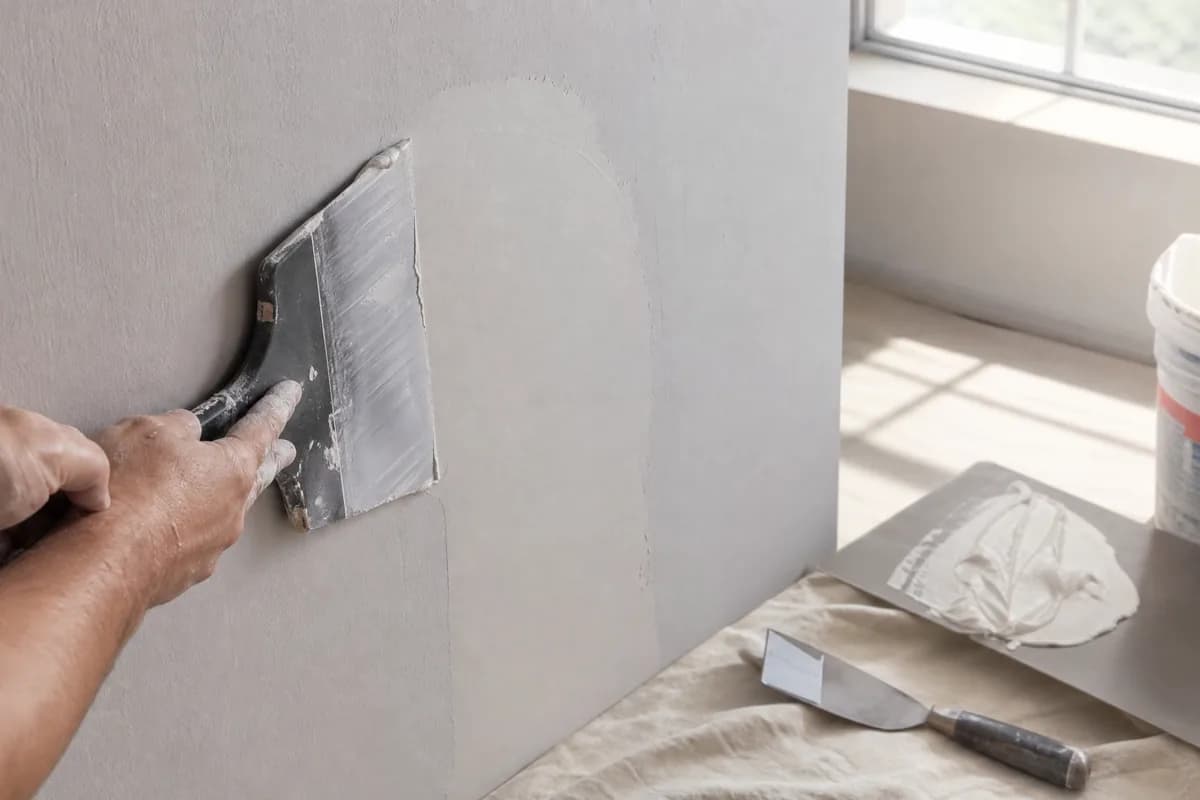
Winter also suits the slow prep that comes before paint. Drywall repair and skim coating go on in thin coats that dry between passes, and joint compound has its own cold-weather rule: USG says to keep the building at a minimum of 55°F (opens in a new tab) while finishing joints with its Beadex all-purpose compound. Heated rooms clear that easily.
Removing old wallpaper puts water or steam on the walls, and they have to dry completely before the sealing primer goes on. Dry winter air helps them get there.
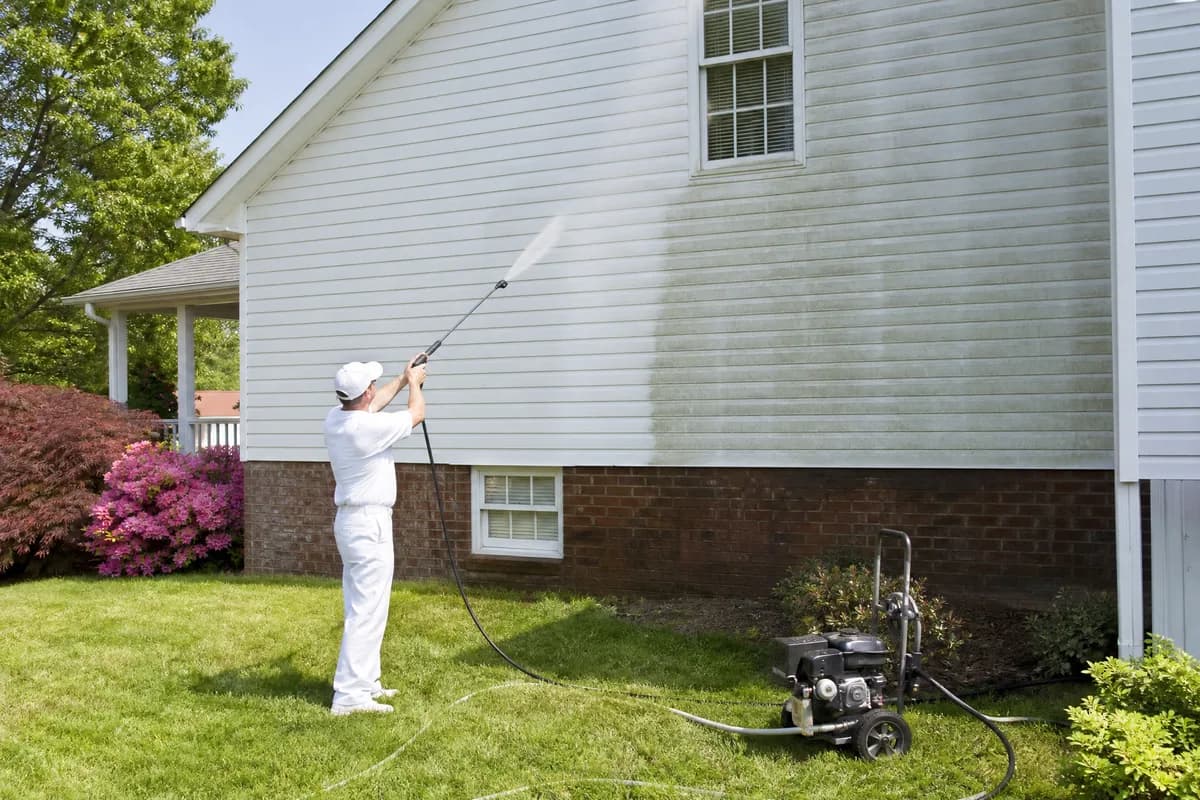
Exterior painting is the part that waits. Siding, trim and decks depend on outdoor temperatures and dry days, so they belong on the spring-to-fall calendar; our exterior painting page explains the season.
If you'd rather hand the winter list to a crew, we paint interiors, repair drywall and remove wallpaper across Northern Virginia with Sherwin-Williams and Benjamin Moore paint, and your written quote names the product for every room. Start with a free, no-obligation estimate and we'll set up a walkthrough.
Sources
Rules, dates and product limits in this article come from these pages. Check them again before you start; agencies update their guidance.
- Sherwin-Williams — Duration Home Interior Latex Flat, Product Data Sheet (A95 Series, 10/2026) (opens in a new tab) — accessed November 7, 2026
- Sherwin-Williams — Emerald Interior Latex Matte, Product Data Sheet (K36 Series, 08/2026) (opens in a new tab) — accessed November 7, 2026
- Benjamin Moore — Regal Select Interior Paint & Primer, Eggshell N549, Technical Data Sheet (N549 US 040125) (opens in a new tab) — accessed November 7, 2026
- Benjamin Moore — Regal Select Interior Paint & Primer, Flat N547, Technical Data Sheet with thinning chart (N547 US 121620) (opens in a new tab) — accessed November 7, 2026
- Benjamin Moore — Aura Interior Paint & Primer, Matte N522, Technical Data Sheet (N522 US 031225) (opens in a new tab) — accessed November 7, 2026
- National Weather Service Baltimore/Washington — Dulles, VA monthly mean temperatures and normals (opens in a new tab) — accessed November 7, 2026
- U.S. EPA — Volatile Organic Compounds' Impact on Indoor Air Quality (updated June 23, 2026) (opens in a new tab) — accessed November 7, 2026
- University of Minnesota Extension — Controlling moisture problems in your home (reviewed 2023) (opens in a new tab) — accessed November 7, 2026
- University of Minnesota Extension, Minnesota WeatherTalk — Typical cold, dry winter air (January 17, 2025) (opens in a new tab) — accessed November 7, 2026
- USG — Beadex Brand All Purpose Joint Compound, Submittal Sheet (J289958, rev. 6-22) (opens in a new tab) — accessed November 7, 2026
Talk to Your Local Team
Free walkthrough and a written quote from the office that serves your ZIP code.