What Spotted Lanternfly Leaves on Decks, Fences and Siding
Spotted lanternfly is an invasive, sap-feeding insect, and around a house it leaves three kinds of residue. Each one ends up between your boards or siding and the next coat of finish.
- Egg masses. Waxy patches about 1 to 1.5 inches long. Virginia Cooperative Extension (opens in a new tab) says the coating starts shiny gray, turns dull grayish-brown and may crack to expose the eggs; the USDA (opens in a new tab) compares older masses to a smear of cracked mud.
- Honeydew. A sugar-rich fluid the insects excrete in large volumes. Virginia Tech (opens in a new tab) says it covers plants and the ground beneath infested plants, so a deck, patio set or fence under that tree sits in the drip zone.
- Sooty mold. A black fungus that grows on honeydew and turns a sticky film into dark, blotchy staining.
Egg masses are the part homeowners tend to miss, because they don't stay on trees. Extension's homeowner sheet lists fencing, decking, lawn furniture, grills, firewood and construction materials among the places they turn up, and the USDA says females lay on any hard surface. Adults lay from September until cold weather kills them, and the masses stay put until they hatch in spring.
Start near the trees. Lanternflies strongly prefer tree-of-heaven, and Virginia Tech says adults focus on it for feeding and egg laying in the fall. A deck or fence beside one is the first place to look.
Why It Has to Come Off Before Paint or Stain
Paint and stain makers put the same rule in writing. Sherwin-Williams' deck prep guide (opens in a new tab) says the surface must be clean, dry and free from mildew, and warns that on a surface that isn't clean, finishes "have trouble sticking and may end up peeling." Benjamin Moore's Aura Exterior data sheet (opens in a new tab) says surfaces must be clean and free of grease, wax and mildew, and its Arborcoat stain data sheet (opens in a new tab) wants clean, dry, absorbent wood the stain can penetrate. Lanternfly residue fails that test three ways:
- An egg mass is a waxy lump, not wood. A coat brushed over it bonds to the egg mass. When the mass is scraped or weathers off later, the finish goes with it and leaves a bare spot.
- Honeydew is a sugar film. Stain can't soak through it, and paint grips the residue instead of the surface. Benjamin Moore even calls for washing sheltered areas such as eaves and overhangs to remove contaminants that "can interfere with proper adhesion."
- Sooty mold shows through. The data sheets don't name it, but they treat mildew, another fungus, as something to remove before coating. Translucent stains like Arborcoat are made to add color without hiding the grain, so black blotches left on the boards stay visible under the new finish.
How to Remove Lanternfly Egg Masses, Honeydew and Sooty Mold
Step 1: Scrape and destroy the egg masses
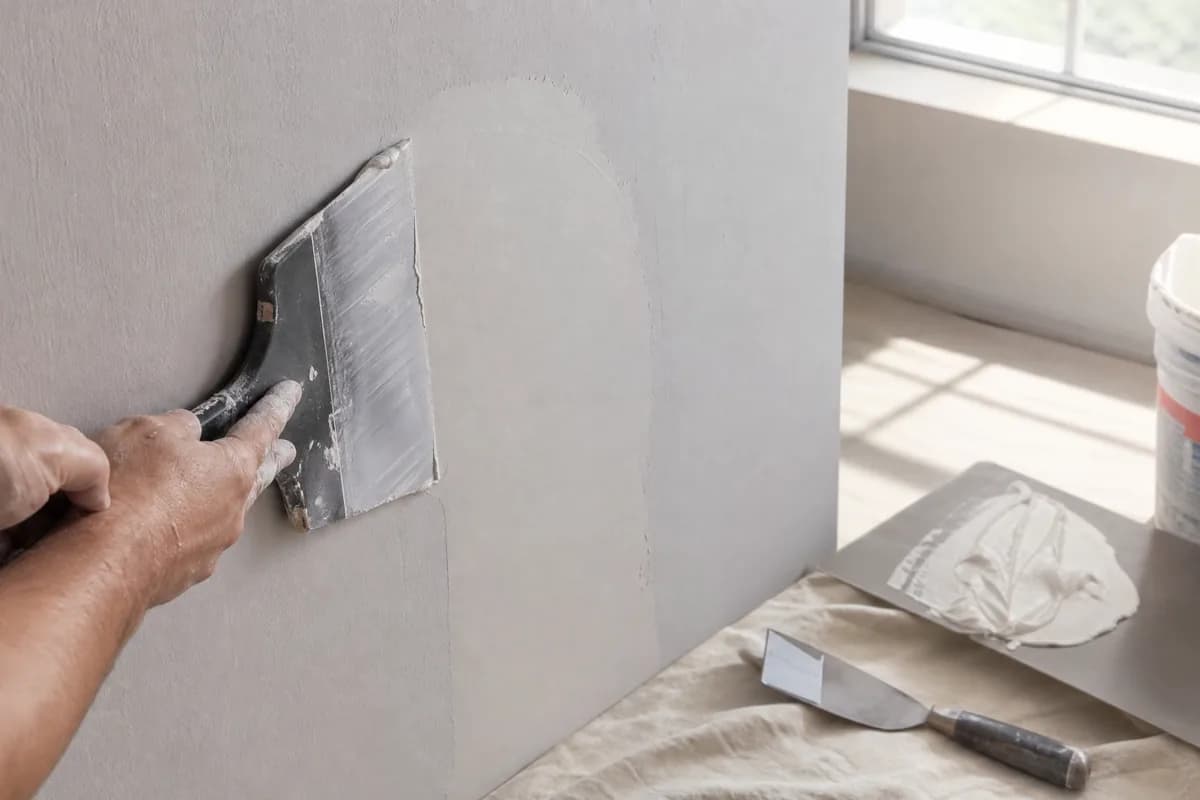
Virginia Cooperative Extension's yard and landscape guide (opens in a new tab) says to scrape and destroy every egg mass within reach from November through early April. Scrape them into a zip-top bag or container with rubbing alcohol or hand sanitizer, as the state agriculture department's homeowner checklist (opens in a new tab) directs, then seal the bag and throw it away. On painted siding and trim, a plastic putty knife does the job without gouging the finish.
Step 2: Check the hidden spots
Go over deck posts, rails, stair stringers, both sides of fence boards and any lattice, then outdoor furniture, grills, the firewood stack and stone walls. Egg masses high on a tree's branches are a job for an arborist.
Step 3: Rinse honeydew while it's fresh
Sooty mold grows on honeydew, so the sooner the sticky film comes off decks, railings and furniture, the less mold there is to scrub later. Fresh honeydew is sugar, and a garden hose makes a gentle first pass.
Step 4: Wash off the sooty mold at low pressure
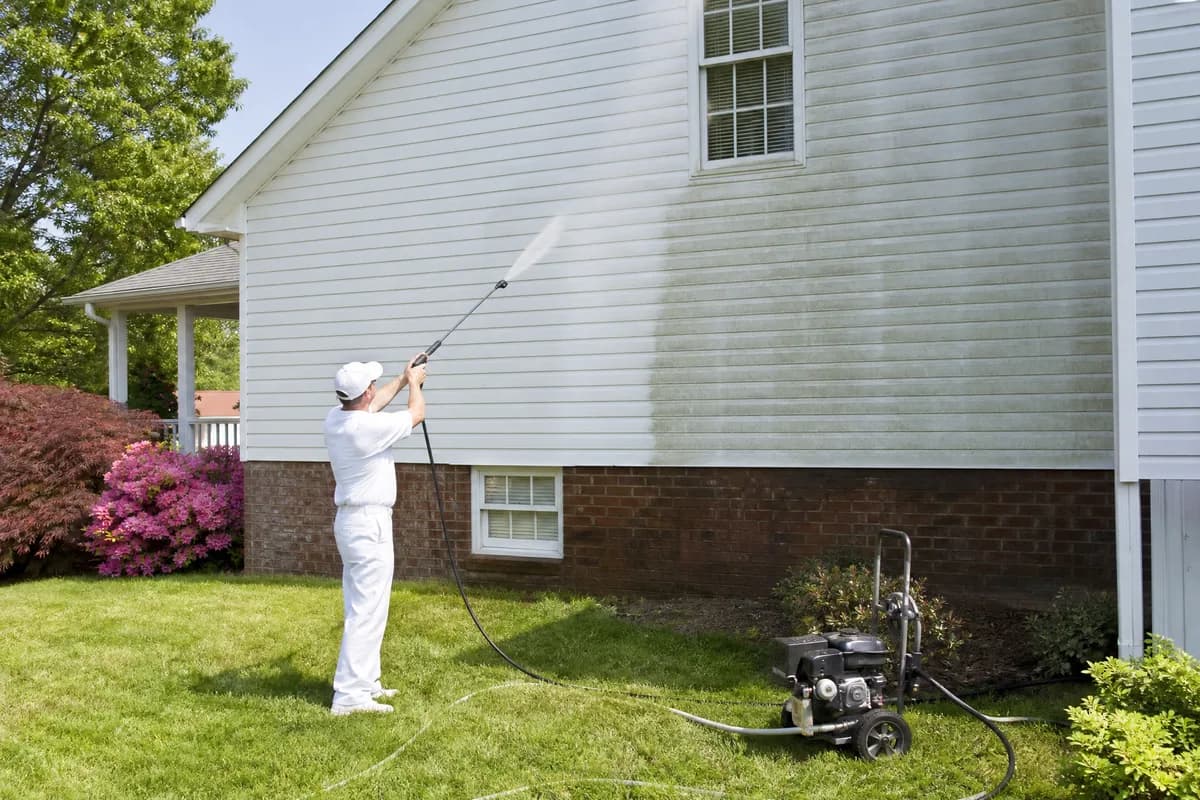
Use a cleaner made for the surface, exactly as its label directs, and rinse with fresh water. Keep the pressure low on wood so the fibers don't tear, and never aim water up behind siding laps. Our power washing page explains how we soft-wash and why the wash always comes first.
Step 5: Let everything dry
Sherwin-Williams' exterior painting how-to (opens in a new tab) calls for at least 24 to 48 hours of drying after a wash before painting. Stain needs dry wood to soak into, and a moisture meter reading beats a guess.
Step 6: Look again before the first coat
From September through November, adults may still be laying eggs. A walk-around on the morning work starts catches anything new.
When to Clean, and When to Paint or Stain
The two calendars fit together. Egg masses sit on surfaces through the cold months, when most exterior coatings can't go on anyway, and Virginia Tech says they hatch in late April and early May, just as exterior season gets going.
| Months | What lanternflies are doing | What to do at home |
|---|---|---|
| October to early April | Egg masses sit on trees, fences, decking, furniture and other hard surfaces | Inspect and scrape; plan the project and book the walkthrough |
| Late April to early May | Eggs hatch | Finish scraping; wash, dry and start coating once temperatures allow |
| May to July | Nymphs feed, and honeydew starts collecting under infested trees | Stain and paint clean, dry surfaces |
| July to August | Adults appear in July and are abundant in August | Rinse honeydew off decks, rails and furniture under host trees |
| September to November | Adults lay eggs until cold weather kills them | Inspect before and during any fall paint or stain job |
How warm is warm enough depends on the product. Sherwin-Williams' how-to advises against painting below 50°F, while Benjamin Moore's Aura Exterior and Arborcoat translucent stain data sheets set the floor at 40°F for air and surface. The data sheet for the exact product decides. Our exterior painting and deck and fence staining pages explain how we schedule around the weather.
Want a project this winter anyway? Take it indoors: see painting your interior in winter.
Your Pre-Project Checklist
- Walk the deck, fence line and foundation this winter and scrape every egg mass you can reach into a sealed bag of rubbing alcohol or hand sanitizer.
- Check furniture, planters and play sets before moving them to another property; Extension warns that eggs can hatch in the new location.
- Note any tree-of-heaven near the deck or house. Virginia Tech calls managing it important to limiting lanternfly numbers, and your local Extension office can advise.
- Look for shiny, sticky patches or black film under trees, and point them out at the walkthrough so the wash covers them.
- Plan the wash and the stain or paint for when the weather opens up, with drying time in between.
Spotted Lanternfly in Northern Virginia and the Shenandoah Valley
It has spread a long way since. The Virginia Department of Agriculture and Consumer Services (VDACS (opens in a new tab)) says the insect has been found in more than half of Virginia's counties and independent cities, and its list of places where it no longer needs reports includes every locality we serve: Arlington, Alexandria, Fairfax County, the City of Fairfax, Falls Church, Loudoun, Prince William, Manassas and Manassas Park, plus Warren, Frederick, Winchester, Shenandoah and Page in the Valley.
Virginia repealed its quarantine (opens in a new tab) effective March 27, 2025, after VDACS concluded it was no longer slowing the spread; by then, 67 Virginia cities and counties had reproducing, persistent populations. Virginia Tech says destroying egg masses might reduce the next generation but is not likely to eradicate the insect. Around here, lanternfly cleanup is simply part of exterior upkeep now.
Questions About Lanternflies and Painting
- Will paint or stain over an egg mass kill the eggs?
- Don't count on it. Virginia Cooperative Extension says even contact and systemic insecticides aren't effective against egg masses; the instruction is to scrape and destroy them. A coat of paint also leaves a lump that peels when the mass comes off.
- Do I need to report egg masses I find on my deck?
- Not anywhere we work. VDACS no longer requires reports from any county or city in our service area, and Virginia Tech says there's no need to report the insect where it's already known. Somewhere new? VDACS takes reports through its online Invasive Species Reporting Tool.
- Can I take patio furniture or firewood to another property?
- Inspect it first. Virginia Tech says to check lawn furniture, grills, playground equipment, storage containers and landscaping materials for egg masses before moving them out of infested areas. Virginia's quarantine is gone, but other states may still regulate lanternfly, which matters mostly to businesses shipping out of state.
- Will sooty mold come back after the deck is stained?
- It can, as long as lanternflies keep feeding in the tree above, because the mold grows on fresh honeydew. Rinsing honeydew off while it's new keeps the finish clean; what to do about the tree is a question for your Extension office or an arborist.
Rather Not Scrape and Scrub? Let Us Take It On
Start with a free walkthrough. We look at the deck, fence and siding, point out any egg masses, honeydew and sooty mold, and put the cleanup, drying time and the stain or paint into one written quote, so you see every step before work begins. Request your free estimate and the office that serves your ZIP code will set up the visit.
Sources
Rules, dates and product limits in this article come from these pages. Check them again before you start; agencies update their guidance.
- Virginia Cooperative Extension — Homeowner Suggestions for Managing Spotted Lanternfly (ENTO-586NP, 2024), posted by Prince William County (opens in a new tab) — accessed November 7, 2026
- U.S. Department of Agriculture, APHIS — Spotted Lanternfly (last modified Aug. 26, 2025) (opens in a new tab) — accessed November 7, 2026
- Virginia Cooperative Extension — Spotted Lanternfly (ENTO-180NP, Aug. 21, 2025) (opens in a new tab) — accessed November 7, 2026
- Sherwin-Williams — How-To Prepare a Deck for Staining (opens in a new tab) — accessed November 7, 2026
- Benjamin Moore — Aura Waterborne Exterior Paint, Satin Finish 631: Technical Data Sheet (2021) (opens in a new tab) — accessed November 7, 2026
- Benjamin Moore — Arborcoat Waterborne Exterior Stain, Translucent W623: Technical Data Sheet (2019) (opens in a new tab) — accessed November 7, 2026
- Virginia Cooperative Extension — Best Management Practices for Spotted Lanternfly in Yards and Landscapes (ENTO-344NP, revised Oct. 16, 2025) (opens in a new tab) — accessed November 7, 2026
- VDACS, USDA and Virginia Cooperative Extension — Spotted Lanternfly: What Citizens Can Do and Checklist for Citizens (opens in a new tab) — accessed November 7, 2026
- Sherwin-Williams — How to Paint a House Exterior (opens in a new tab) — accessed November 7, 2026
- Virginia Cooperative Extension — Spotted Lanternfly in Virginia Vineyards (ENTO-323NP, Feb. 24, 2025) (opens in a new tab) — accessed November 7, 2026
- Virginia Department of Forestry — Spotted Lanternfly (opens in a new tab) — accessed November 7, 2026
- Virginia Department of Agriculture and Consumer Services (VDACS) — Spotted Lanternfly (opens in a new tab) — accessed November 7, 2026
- VDACS — Repeal of Virginia's Spotted Lanternfly Quarantine (Mar. 27, 2025) (opens in a new tab) — accessed November 7, 2026
Talk to Your Local Team
Free walkthrough and a written quote from the office that serves your ZIP code.